For too many people, SEO is one of those things business owners know they should care about, but never quite get. It gets shoved to the bottom of the list because you are told it helps people find you on Google, but not what that really means, how long it takes, or what on earth is happening in the background. To most, it feels like absolute wizardry.
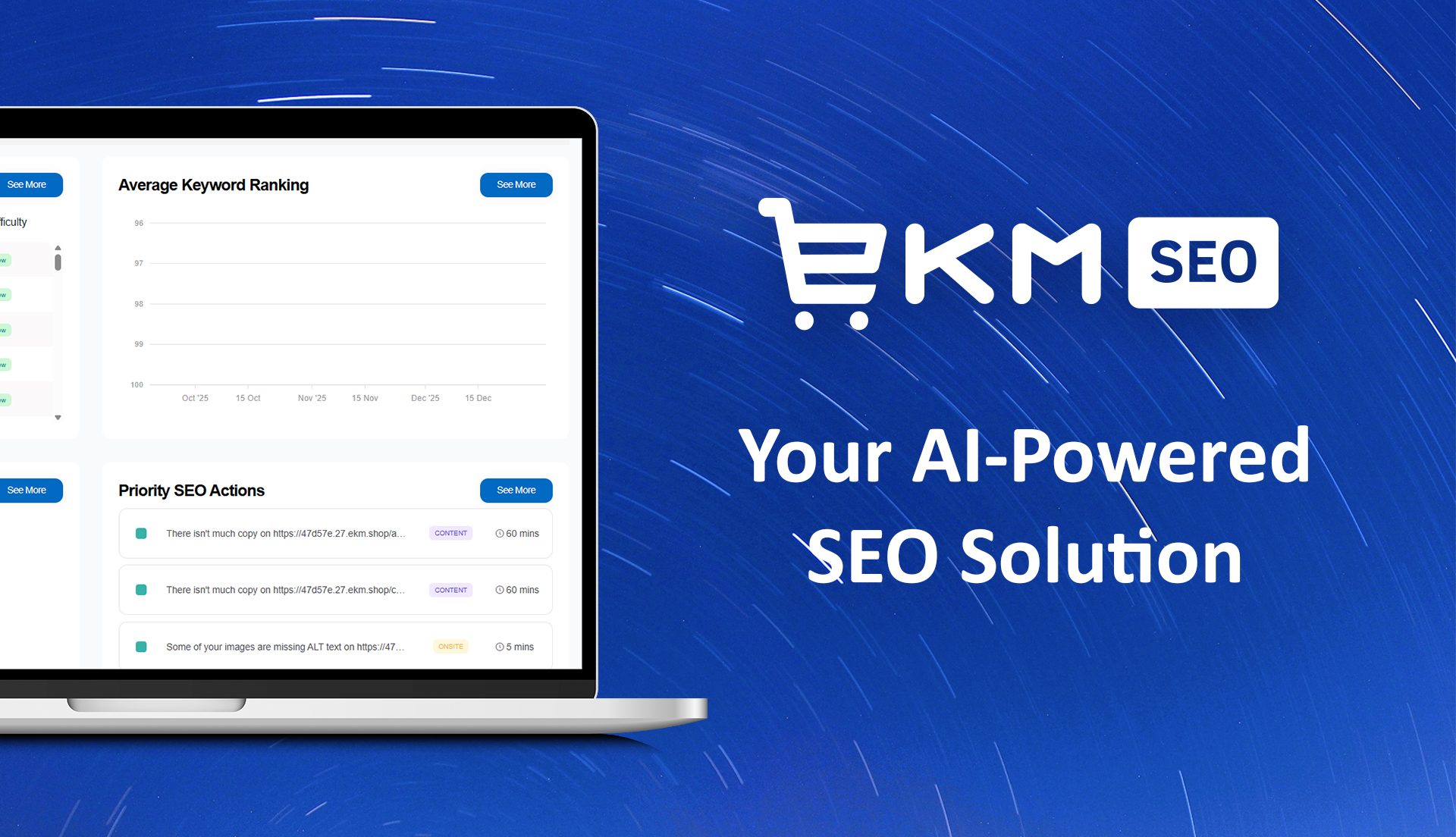
EKM SEO is built to take the mystery out of all that. It brings the main parts of SEO together in one place, with Seb (Your AI search engine buddy) helping to manage the day-to-day work so it keeps moving.
This page acts as a guide and a map. It explains how SEO is approached step by step, what each part is responsible for, and how everything fits together over time.
Who is Seb?
Seb is the AI SEO assistant built into EKM SEO. He is the part of the platform that actually gets the work done, without requiring you to first learn the finer points of SEO.
SEO assists with many small, ongoing tasks. Keyword research, working out which pages matter most, fixing issues that nobody noticed were issues, improving content, keeping local listings in shape, and checking whether any of it is actually working. Seb handles this work in the background, using the tools inside EKM SEO to keep everything moving in the right direction.
He starts by building an understanding of your business and your website, then creates a clear plan for what needs to be done. From there, Seb helps you to work through that plan step by step, making improvements, monitoring progress, and adjusting the approach as results come in.

How Seb works for you:
Step 1: Understanding your business and your website
Every SEO journey starts with context. Before any keywords are researched or changes are made, Seb needs to fully understand what kind of business you are running and how your website currently works.
This includes things like:
- What products or services you offer
- Who your customers are and what they are likely to search for
- Whether you serve a local area, multiple locations, or a wider market
- How your website is structured and how pages are currently performing
This step matters because SEO is not one-size-fits-all. The way a local service business approaches SEO is very different from an ecommerce store or a professional services website. Starting with a clear picture helps avoid generic advice and keeps the work focused on what actually matters for your business.
It also creates a baseline, so progress can be measured properly later on.
Step 2: Building a clear and realistic SEO strategy
SEO works best when there is a plan behind it. Without a strategy, it is easy to jump between tasks, optimise the wrong pages, or focus on keywords that look appealing but never lead to enquiries or sales.
At this stage, Seb help you to build a strategy by:
- Researching what people are genuinely searching for
- Looking at how competitive those searches are
- Matching keywords to the most relevant pages on your site
- Deciding what should be worked on first and what can wait
This avoids the common trap of trying to optimise everything at once. Instead, effort is directed towards the pages and searches that are most likely to bring value.
For many businesses, this also brings clarity. It becomes easier to understand why certain pages matter more than others, and how different parts of the site support the same goal.
Step 3: Fixing technical issues that quietly hold sites back
Technical SEO is often overlooked because it is not always visible on the surface. A website can look fine to users, but still have issues that make it harder for search engines to crawl, understand, or rank.
Seb looks for common technical problems such as:
- Broken links that lead to missing pages
- Duplicate titles or descriptions that confuse search engines
- Pages that are not being indexed correctly
- Slow-loading pages that affect user experience
These issues rarely announce themselves, but they can limit performance if left unresolved. Fixing them helps create a stronger foundation for everything else, from content improvements to local visibility.
For business owners, this work often happens quietly in the background, but it plays an important role in long-term SEO health.
Step 4: Helping local customers find and trust your business
For businesses that serve a specific area, local search visibility is often one of the most valuable parts of SEO. When someone searches for a service nearby, appearing clearly in local results or on Google Maps can make a real difference.
Local visibility is not just about being listed. It also depends on accuracy, activity, and trust. This includes keeping business details up to date, responding to customer reviews, and showing that the business is active and engaged.
Seb supports this by:
- Identifying local SEO actions that need attention and surfacing them as recommendations. This can include suggested responses to reviews, profile updates, and other local activity, all of which can be reviewed and approved before anything goes live. This keeps local SEO moving while ensuring you stay in control.
Step 5: Keeping business details consistent across the web
Search engines use consistency as a trust signal. When your business details appear differently across websites and directories, it can weaken confidence and affect local performance.
Seb helps by:
- Submitting your business details to key online directories
- Keeping names, addresses, and contact information consistent
- Updating listings when details change
This work supports local SEO and helps reinforce your presence across the web. While it may not be something customers notice directly, it plays a supporting role in building trust and authority over time.
Step 6: Improving and expanding your website content
SEO is often associated with creating new content, but that is only part of the picture. For many business owners, content is where SEO tends to stall. Not because it is unimportant, but because it takes time, decisions, and regular attention.
Seb helps by producing real, usable content and improvements, which are surfaced as recommendations you can review and approve. This can include:
- Draft blog posts written around your content plan and priorities
- Improvements to existing website copy to make it clearer, more helpful, and more search-friendly
- Suggested page titles, headings, and meta descriptions for pages that need strengthening
- Suggested Google Business Profile posts to help keep your local presence active
Rather than being told what needs doing and left to implement it yourself, you are reviewing prepared updates and deciding when they go live. This helps keep content moving without it becoming a constant drain on your time.
Step 7: Managing signals beyond your website
SEO does not stop at your website itself. Search engines also look at signals from elsewhere on the web to help decide how trustworthy and relevant a site is.
Seb keeps an eye on off-site signals such as:
- Backlinks pointing to your site
- Mentions and listings across the web
- Links that could be harmful or unhelpful
This work supports everything else that is happening on-site. It helps maintain a healthy profile without requiring you to monitor links or listings yourself.
Step 8: Tracking progress and adapting over time
SEO is an ongoing process. Search behaviour changes, competitors adapt, and your business may grow or shift focus.
Seb tracks progress by:
- Monitoring keyword rankings and visibility
- Reviewing traffic trends
- Identifying what is working and what needs adjusting
This allows the SEO plan to evolve rather than stay fixed. Over time, this helps build steady improvements instead of short-term spikes followed by stagnation.
How all of this fits together
Each step in the process supports the next. Strategy informs what gets fixed. Technical improvements support content. Local signals reinforce trust. Reporting feeds back into planning.
EKM SEO brings these pieces together so they are not treated as isolated tasks. Seb uses the platform to keep work consistent, prioritised, and moving in the right direction.
Seeing the system in action
Reading about SEO is helpful, but seeing how it works in practice can make things clearer.
If you want to understand how Seb uses the EKM SEO platform day to day, you can watch a walkthrough that shows:
- How tasks are planned
- What actions are taken
- How progress is tracked over time
→ Register for the EKM SEO demo
A final thought
EKM SEO is built for small to medium sized businesses that want steady, meaningful SEO progress without needing to become experts themselves. The aim is not to overwhelm, but to create a clear process that improves visibility over time.
SEO takes patience, but with the right structure and ongoing attention, it can become a reliable part of how customers find your business.