If you want to grow an ecommerce business sustainably, SEO is one of the smartest places to start. It builds long-term visibility, attracts customers organically, and helps your products show up when people are actively searching. Over time, strong SEO compounds and becomes a valuable growth asset.
But as we’ve discussed recently, SEO takes time.
If your goal for the year ahead is growth, relying on SEO alone can start to feel restrictive. That’s where PPC comes in. Not as a replacement, but as the natural next step once your foundations are in place.
SEO builds the foundations for growth
SEO works by earning attention rather than buying it. By optimising your site structure, categories, product pages, and content, you make it easier for search engines to understand what you sell and who it’s for.
The payoff is consistency. Once pages start ranking, they can drive traffic day after day without additional spend. SEO also builds trust. Shoppers tend to trust organic results, especially when your site appears repeatedly for relevant searches.
For ecommerce businesses, SEO is essential. It helps customers discover your store, research products, compare options, and return later when they’re ready to buy.
The challenge is speed. SEO is a long-term strategy, and even well-optimised pages can take weeks or months to reach their potential. If you’re launching new products, entering a competitive market, or trying to increase revenue quickly, SEO alone may not give you the momentum you need.
Where paid advertising fits into the picture
Paid advertising steps in where SEO slows down.
Instead of waiting for rankings to build, PPC allows your products to appear immediately when customers are searching with intent. It gives you visibility at the exact moment someone is ready to buy.
That immediacy is what makes PPC so valuable for growth-focused ecommerce businesses. It gives you control. You decide which products to promote, when they appear, and how much budget to invest.
Used strategically, paid advertising helps you:
- Generate traffic quickly
- Support new product launches
- Capitalise on seasonal demand
- Drive sales during quieter periods
- Test opportunities before committing long-term
PPC is not about chasing traffic for the sake of it. It’s about capturing demand when it exists.
How organic and paid channels work together
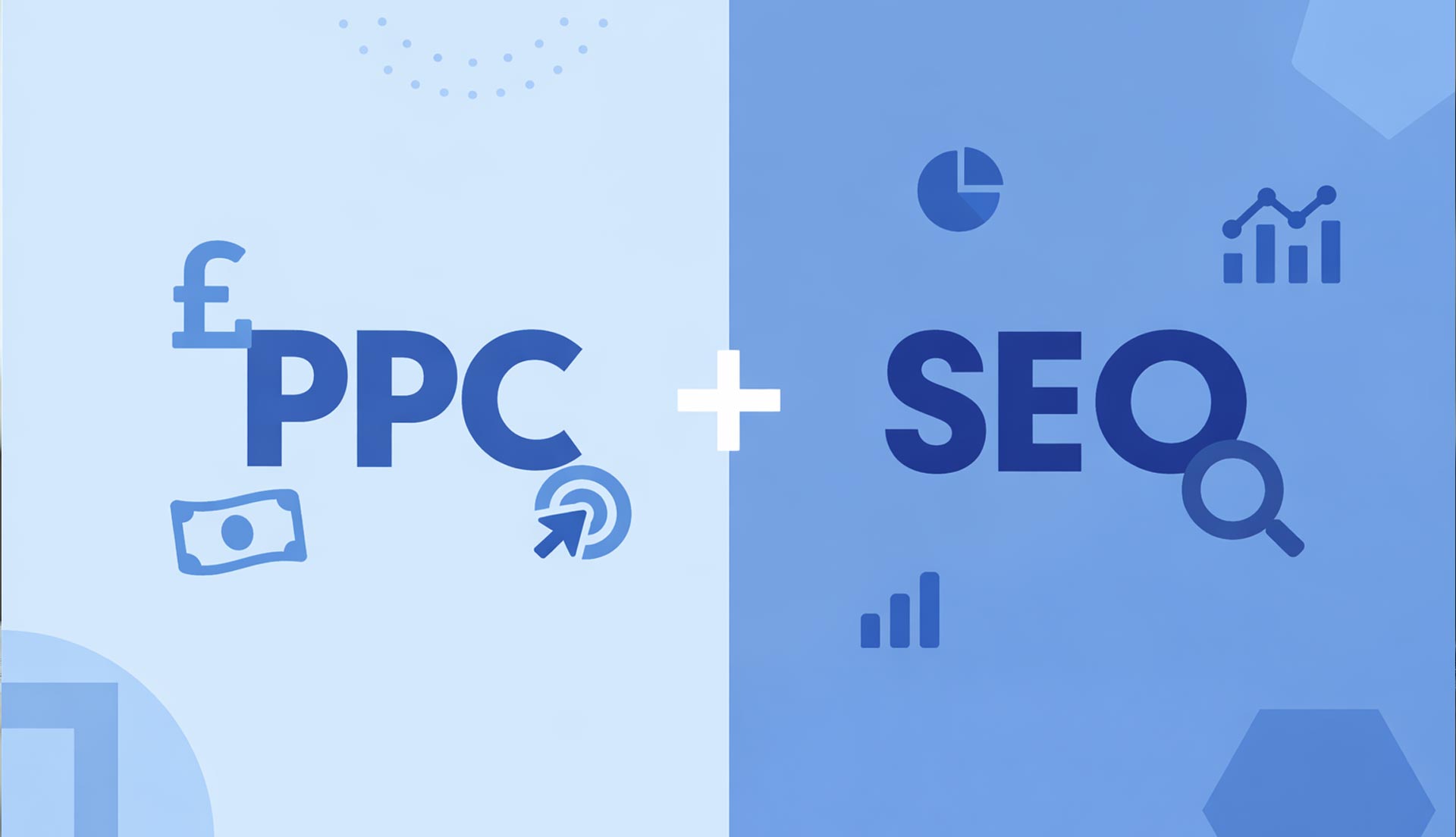
The most effective growth strategies don’t treat SEO and PPC as separate channels competing for attention. They treat them as complementary tools.
SEO supports the early and middle stages of the buying journey. It attracts shoppers who are researching, browsing, and comparing options. PPC supports the later stages, when shoppers are ready to make a decision.
Together, they create balance.
SEO builds visibility and trust over time. PPC adds speed and precision. When one channel slows down, the other can support it. When both are aligned, growth becomes more predictable and easier to manage.
This is especially important for ecommerce, where demand fluctuates and competition is constant.
Why ecommerce businesses often stall without PPC
Many businesses invest heavily in SEO and then wonder why growth plateaus. The foundations are there, but momentum slows.
Common frustrations include:
- New products not getting noticed quickly
- Strong organic traffic that doesn’t always convert
- Missed opportunities during peak demand
- Reliance on seasonal spikes rather than consistent sales
SEO alone can struggle to solve these challenges in the short term. PPC fills those gaps. It gives you a way to amplify what’s already working and support areas where organic performance needs time to catch up.
Rather than waiting, PPC allows you to act.
Using PPC to learn faster
One of the biggest advantages of PPC is how quickly it provides insight.
With SEO, learning takes time. Rankings change slowly, and it can be hard to isolate what’s working. PPC delivers immediate feedback. You can see which products attract attention, which searches convert, and where customers drop off.
This insight doesn’t just improve PPC performance. It informs wider decisions around pricing, product ranges, content, and merchandising. PPC becomes a feedback loop that strengthens your entire growth strategy.
When used this way, paid campaigns are not just a sales channel. It’s a learning tool.
When paid advertising becomes a growth strategy
There’s a big difference between trying PPC and using PPC strategically.
Trying PPC often looks like switching ads on, setting a budget, and hoping for results. Strategic PPC is intentional. It supports clear goals and is managed with performance in mind.
For ecommerce businesses, this might mean:
- Prioritising best-selling or higher-margin products
- Scaling campaigns that consistently convert
- Using paid advertising to smooth out revenue dips
- Supporting organic growth while SEO continues to build
When PPC is treated as part of a wider strategy, it becomes far more effective and far more sustainable.
How EKM supports your next step
Paid advertising can be powerful, but it’s also time-intensive. Campaigns need monitoring, refinement, and optimisation to stay efficient. Left unchecked, performance can slip and budgets can be wasted.
That’s where expert support makes a difference.
EKM’s Growth Services team helps ecommerce businesses use PPC as a genuine growth channel, not a gamble. We focus on performance, profitability, and long-term results, aligning PPC with your products, margins, and goals.
Instead of juggling campaigns yourself, you get expert management built around ecommerce experience.
Building momentum for the Year of Growth
SEO lays the groundwork. Paid advertising accelerates progress.
If your focus this year is growth, the shift from SEO to PPC is not a leap. It’s a logical next step. By combining long-term visibility with immediate intent, you create a stronger, more resilient strategy that supports consistent sales.
If you’re ready to turn visibility into momentum, paid advertising could be exactly what your store needs next. And if you’d like support putting it into action, the EKM team is here to help.

To help bring this to life, we recently shared expert insight into how different channels support traffic growth. In a recent webinar, one of our experts explored different ways eCommerce businesses can increase traffic, including the role both SEO and PPC play at different stages of growth. SEO helps build consistent visibility over time, while PPC can be used to attract high-intent shoppers more quickly when demand is there.