Some of our favourite stories come from customers who’ve worked out exactly how online selling fits their business. The Buffalo Farm is one of them.
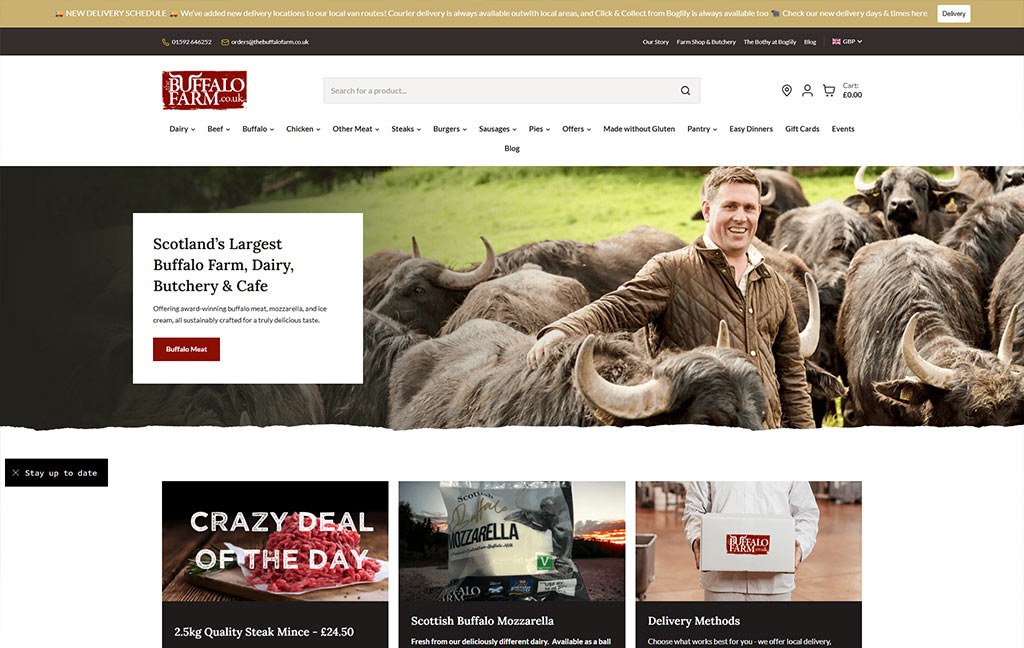
Sarah Carter manages the website for The Buffalo Farm, a farm shop, butchery and café with a busy online store built on EKM. Like a lot of people managing ecommerce for a farm shop, she was once wary of what selling online might do to footfall. Her experience has been the opposite.
“I can’t see why anyone wouldn’t want to have an online presence, especially the click and collect option, because it brings more customers to your shop,” she says.
A visit that doesn’t end at the till
Click and collect turned out to be the piece that made the difference. Customers order online, then come to the farm to pick it up, and that’s rarely where the visit ends. As Sarah puts it: “If it’s a nice day, they’ll go feed the animals, then they’ll stay for a coffee, then they might have lunch.”
It’s a shift in thinking that a lot of independent food retailers wrestle with before they take the plunge, and Sarah has little patience for the old assumption. “Farm shops are probably thinking: if I sold online, that is not bringing customers here, but it actually does the opposite. It does bring people here and you can upsell when people are on site.”
For a business built as much on visits and atmosphere as it is on produce, that matters. An online order isn’t a transaction that happens instead of a trip to the farm. It’s usually the reason for one.
Ordering ahead, without carrying the risk
Click and collect also gives The Buffalo Farm room to sell things that aren’t sitting in stock on any given day. Customers can pre-order online, and the item gets ordered in once the sale is confirmed, rather than sitting on the shelf on spec. It’s a small change with a real effect: less wastage, tighter stock control, and a clearer picture of what’s actually going to sell before it’s bought in.
She’s noticed a pattern in how customers place these orders too. Most come through on a mobile phone, often prompted by an email about a particular offer. Someone sees the offer, knows exactly what they’re getting, and places the order there and then. The upsell happens later, in person, when they arrive to collect it.
A website that doesn’t fight back
Sarah moved to EKM from a previous platform, and describes the difference in day-to-day terms: turning categories on and off, adding new products, running a Christmas shop within the same website rather than maintaining two separate sites. She calls the change “night and day.”
It’s the kind of thing that’s easy to overlook from the outside, but it’s exactly what lets a business like The Buffalo Farm keep the website current without it becoming another job on top of everything else. Time spent fighting a content management system is time not spent on the parts of the business that actually need it, and that’s a large part of what we set out to build EKM around.
A shop that works both ways
What comes through in talking to Sarah isn’t a business that treats its website as a separate operation from the shop. It’s one where the two are meant to reinforce each other: the website drives visits, the visits drive upsell, and the stock decisions in between are made with more confidence than guesswork alone would allow.
An integration is now available between EKM and The EPOS Bureau, syncing stock, payments and information such as allergens and ingredients between your EPOS system and your website. You can read more about that integration over on The EPOS Bureau’s website, the EKM website where you can find access to a downloadable pack for more information.